
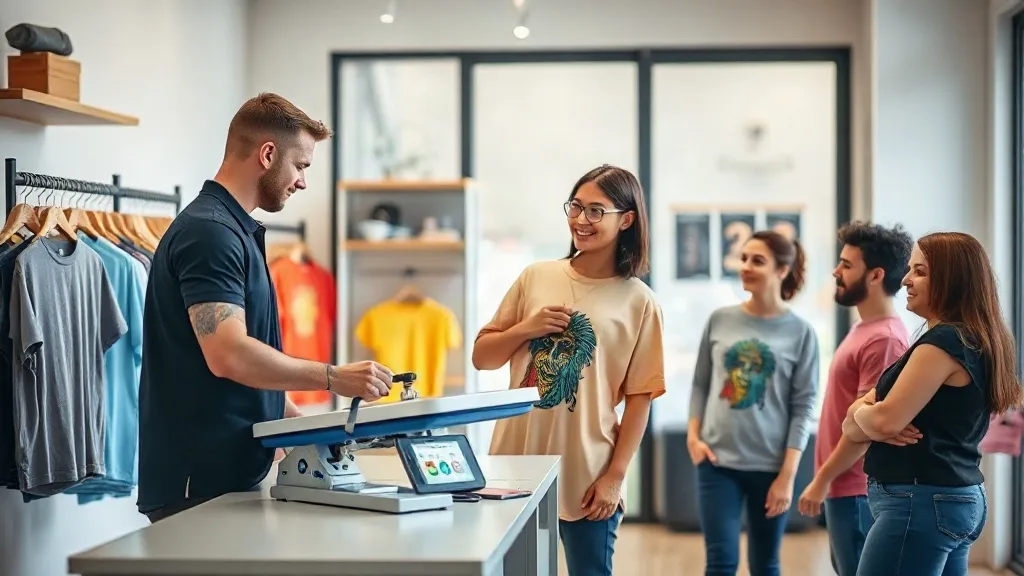
Walk into any mall or main-street shop and you will notice something missing: racks of blank, unbranded tees waiting for someone to print them. Retailers have learned that customers do not want to buy a blank shirt and then hunt for a printer. They want the finished product, in their size, with their design, before they leave the store. That shift has pushed dtf transfers from the back room of print shops into the front window of retail storefronts.
The appeal is simple. A DTF printer and a heat press take up less space than a traditional screen-printing setup, and they let a store offer one-off customization without ordering 24 or 48 units of a single design. For a retailer, that changes the math on custom apparel entirely. You are no longer betting on which design will sell. You are printing what the customer in front of you asks for.
Why Storefronts Are Adding DTF to Their Service Menu
Most retail shops already have the two things DTF needs: a counter where customers wait, and a reason for them to come back. Adding a heat press turns a transaction into an experience. A customer picks a shirt off the rack, chooses a design from a tablet, and watches it get pressed in under two minutes. That is a story they tell friends, and it is a reason to return for the next birthday, team event, or family reunion.
The economics work because dtf transfers are printed on demand. A shop can order a gangsheet with twenty different designs, press them as needed, and never hold more than a few days of inventory. Compare that to screen printing, where each color and each design requires its own setup and a minimum run. For a store that sells ten to fifty custom pieces a week, DTF removes the barrier that kept custom apparel out of retail in the first place.
The dead stock problem disappears
Every retailer knows the pain of ordering 48 hoodies in a design that sells twelve. The remaining thirty-six sit on a shelf, get marked down, and eat into margin. With DTF, the design lives as a digital file until someone orders it. You can offer a catalog of fifty designs without owning a single printed transfer until the customer says yes. That is not just a cost saving; it is a completely different approach to buying inventory.
Small spaces, big capability
A DTF setup needs a printer, a shaker or powder unit, and a heat press. Many storefronts start with a compact press and order transfers from a wholesale supplier, which means they skip the printer entirely. That is often the smartest first step. You test demand with almost no capital, and if custom apparel takes off, you can bring printing in-house later. The point is that a 200-square-foot shop can offer the same customization as a 2,000-square-foot print shop.
What Customers Actually Ask For at the Counter
Retail custom apparel is not the same as team uniforms or corporate orders. The requests are smaller, faster, and more personal. Understanding the patterns helps a store stock the right blanks and price the service correctly.
- Family and group shirts: reunions, vacations, and birthday parties where everyone wants a matching shirt with a name or number.
- Local team and club gear: youth sports, church groups, and hobby clubs that need ten to twenty pieces with a logo.
- Memorial and tribute pieces: sensitive orders that require care, fast turnaround, and a design that looks right on the first press.
- Small business branding: a cafe owner who wants five aprons, or a barber who needs ten tees for staff.
- Gifts and souvenirs: walk-in customers who want a shirt with a local landmark or a inside joke printed while they wait.
Each of these has one thing in common: the order is too small for traditional screen printing and too urgent for a two-week turnaround. That is exactly the gap DTF fills.
Pricing Custom Work Without Guessing
The most common mistake a storefront makes is pricing custom work like a blank sale. A shirt that costs eight dollars wholesale is not an eighteen-dollar custom piece. The press time, the transfer, the design handling, and the risk of a mistake all have to be built into the price. A simple rule is to charge for the blank, the transfer, and a service fee that reflects your time. If a customer brings their own garment, the service fee should be higher because you are taking on the risk of pressing someone else's property.
It also helps to offer tiers. A single custom shirt priced at thirty-five dollars feels fair when the customer sees the press in action. A set of ten shirts at twenty-eight dollars each feels like a deal and encourages larger orders. The tiers do not need to be complicated; they just need to reward the customer for giving you a job that is easier to batch.
When to order transfers versus printing in-house
A store that sells fewer than twenty custom pieces a week will usually save money by ordering transfers from a wholesale supplier. The per-piece cost is higher, but there is no printer maintenance, no powder mess, and no learning curve. Once volume climbs, the math flips. A shop that presses fifty or more pieces a week can justify bringing a DTF printer in-house and printing its own gangsheets. The decision is not about prestige; it is about where the break-even point falls for your specific volume and design mix.
Finding a Transfer Supplier That Fits Retail Speed
Retail customers are not patient. If someone orders a shirt for a Saturday party, they need it by Friday. That makes turnaround time the most important factor in choosing a supplier. When a store owner searches for dtf transfers near me, the real question behind the search is usually about delivery speed and reliability, not geography. A supplier that ships same-day or next-day is worth more than one that saves a few cents per sheet but takes a week to arrive.
Quality matters just as much. A transfer that cracks after two washes turns a happy customer into a refund request. Ask for samples before committing to a supplier, press them on the blanks you actually sell, and wash them at least five times. Check the edges for lifting and the colors for fading. A supplier that passes that test is one you can build a retail program around.
Keep a small buffer of popular designs
Even with on-demand printing, a few designs sell again and again: local landmarks, simple typography, and seasonal themes. Keeping a small stack of pre-printed transfers for those designs means you can press and hand off a shirt in minutes during a rush. The buffer should be small, maybe ten to twenty transfers per design, so you are not recreating the dead stock problem you set out to solve.
The Customer Experience Is the Product
What separates a storefront that succeeds with custom apparel from one that treats it as a side service is the experience. Customers should be able to see options, touch samples, and understand what they are getting. A simple binder with pressed samples on different fabrics does more than any sign. It lets a customer feel the print, see how it stretches, and choose a blank with confidence.
Staff training matters too. A press operator who knows how to handle a stubborn seam or a heat-sensitive fabric will save a store from costly reprints. A short training session on temperature, pressure, and peel timing is enough for most retail staff, but it has to happen before the first customer walks in with a deadline. The stores that get this right treat the press like any other piece of retail equipment: something to be learned, maintained, and respected.
Frequently Asked Questions
Can a small retail store offer custom shirts without buying a DTF printer?
Yes. Many storefronts start by ordering transfers from a wholesale supplier and pressing them with a heat press. This keeps the startup cost low and lets the store test demand before investing in a printer. Once volume justifies it, printing can move in-house.
How long does a DTF transfer last on a retail garment?
A properly pressed DTF transfer on a compatible fabric typically lasts through many washes, often as long as the garment itself. Longevity depends on fabric type, press settings, and wash care. Providing simple care instructions with each sale helps customers get the most from their purchase.
What fabrics work best for retail custom apparel with DTF?
DTF works on cotton, polyester, blends, and many specialty fabrics. For retail, 100% cotton and cotton-poly blends are the most common because they are familiar to customers and press reliably. Always test a new blank before adding it to your menu.
How should a store price a single custom shirt?
Price the blank, the transfer, and a service fee that reflects your time and risk. A single shirt usually costs more per piece than a set of ten, and that is reasonable. Offering tiered pricing encourages larger orders while keeping single-piece work profitable.
Is DTF a good fit for stores that also sell online?
It can be, especially for local pickup or same-day delivery. The same on-demand model that works at the counter works for online orders, as long as the store sets clear turnaround expectations and keeps popular designs ready to press.