
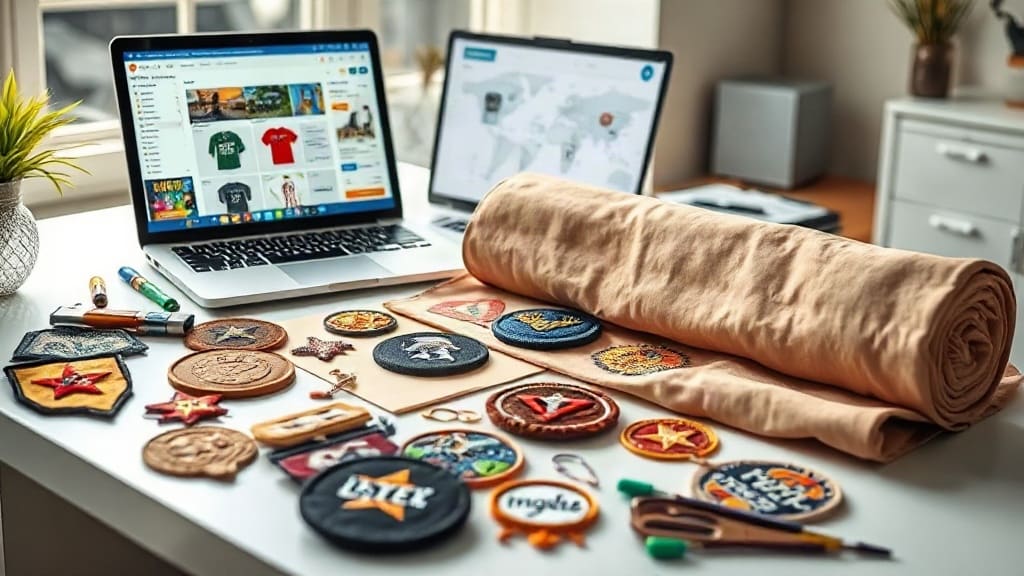
If you're looking to start a business or expand your current brand, print on demand offers a low-risk way to create products without holding inventory. Among the many items you can customize, custom patches and custom banner options stand out for their versatility and visual impact. In this guide, I'll share what I've learned from working with POD suppliers and testing various products, so you can make informed decisions and avoid common mistakes.
Why Print on Demand is a Game Changer
The traditional manufacturing model requires upfront investment, storage space, and a commitment to minimum order quantities. Print on demand flips that model. You only pay when a customer places an order, which means you can test designs and markets with minimal financial risk. I remember my first POD experience: I created a small batch of custom patches for a local event and was surprised by the quality and speed. That success led me to explore other products, and now I use POD for everything from apparel to promotional items.
One of the biggest advantages is the ability to offer a wide variety of products without holding stock. You can easily add new designs or seasonal items, and if something doesn't sell, you haven't lost money on inventory. Plus, many POD platforms integrate with e-commerce sites, automating the ordering and fulfillment process. This allows you to focus on marketing and customer service, not logistics.
Custom Patches: Your Brand's Stitch in Time
Custom patches are more than just fabric embellishments. They serve as badges of identity for clubs, sports teams, businesses, and even everyday fashion. I've seen a small startup use patches to build a community feel, and a military unit use them for morale and identification. The key is understanding the different types and how to design them effectively.
Types of Custom Patches
- Embroidered patches: Traditional and durable, with a textured look. Ideal for logos with fine details.
- Woven patches: Made with thinner threads, allowing for more intricate designs and smaller text.
- PVC patches: Rubber-like, 3D, and waterproof. Perfect for outdoor or rugged applications.
- Chenille patches: Fuzzy and retro, often used for varsity letters and college jackets.
Each type has its own aesthetic and best-use scenario. For example, if you need a patch that will withstand washing and outdoor conditions, PVC might be your best bet. If you want a classic, premium feel, embroidery is a safe choice. I once ordered woven patches for a tech conference because the logo had tiny circuit lines, and they came out sharp and detailed.
Design Tips for Patches
When creating custom patches, simplicity often wins. Avoid overly complex designs that might blur at small sizes. Use bold, contrasting colors, and ensure your text is legible. Consider the background color of the patch and how it will look on the garment it's attached to. Most suppliers require vector files (like AI or EPS) for best results, so learn to use design software or hire a professional.
Also, think about the shape. Standard shapes like circles and shields are popular, but custom shapes can make your patch stand out. I've seen patches in the shape of a coffee cup for a café and a guitar pick for a music store. The shape adds to the story.
Custom Banners: Making a Statement
Custom banner printing is another powerful tool in the POD arsenal. Whether it's for a storefront, event, trade show, or even a birthday party, banners grab attention. With print on demand, you can order banners in various sizes and materials, from vinyl to fabric, without bulk orders.
Choosing the Right Banner Material
- Vinyl banners: Durable, waterproof, and economical. Great for outdoor use and long-term displays.
- Fabric banners: Look more upscale and are reusable. They fold easily and are perfect for indoor events or trade shows.
- Mesh banners: Allow wind to pass through, reducing stress on the banner. Ideal for windy locations.
I once ordered a vinyl banner for a storefront promotion. The colors were vibrant, and it withstood rain and sun for months. For an indoor event, I used a fabric banner that added a touch of elegance. The material you choose can significantly affect the perceived quality.
Designing an Effective Banner
Your custom banner should deliver your message at a glance. Use large, readable text and high-contrast colors. Keep the layout simple, and include your logo and a clear call to action. Remember, people might see it from a distance or while moving, so readability is key. I recommend using a free tool like Canva to mock up your design before ordering.
Also, consider the hanging method. Some banners have grommets, others have pole pockets or are meant for stands. Think about where you'll display it and choose accordingly. Many POD suppliers offer finishing options like hemming and reinforced corners.
Combining Patches and Banners for Brand Cohesion
One of the most effective strategies is to use both custom patches and custom banner in your branding efforts. For example, a sports team might have patches on their uniforms and a banner at their home field. A business could give away embroidered patches as swag and hang a banner at their booth. This creates a cohesive visual identity that reinforces your brand.
I've worked with a local brewery that used patches on their staff aprons and a large banner at beer festivals. The consistent design made their booth instantly recognizable, and the patches became a collector's item among customers. This kind of synergy is powerful.
When planning your designs, ensure they share similar colors, fonts, and imagery. This doesn't mean they have to be identical, but they should feel like they belong together.
How to Choose a Print on Demand Supplier
Selecting the right POD supplier is critical. Not all are created equal, especially when it comes to quality and reliability. Here are factors I consider:
- Product quality: Order samples to check stitching, color accuracy, and durability.
- Pricing: Compare per-unit costs and shipping fees. Look for volume discounts if you anticipate high sales.
- Production time: Faster turnaround is crucial for customer satisfaction.
- E-commerce integration: Does the supplier integrate with Shopify, WooCommerce, or Etsy? Automated order processing saves time.
- Customer support: Test their responsiveness. You'll need them when issues arise.
I've found that suppliers who specialize in one product, like patches, often produce better results than generalists. For instance, a patch specialist might offer more thread colors or border options. Do your research and read reviews.
Pitfalls to Avoid in POD
While print on demand is convenient, there are common mistakes that can hurt your business. One is neglecting to proof your designs. Always request a digital proof and, if possible, a physical sample. Another is underpricing your products. Remember to factor in the product cost, shipping, and your time when setting prices.
Also, don't rely solely on one supplier. If they run out of stock or close down, you'll be left scrambling. I diversify across at least two suppliers for critical items. And finally, be cautious with trademarked or copyrighted designs. Make sure you have the rights to use any images, logos, or characters.
Marketing Your POD Products
Having great products is only half the battle. You need to market them effectively. Start by building an email list and using social media to showcase your designs. For custom patches, consider partnering with influencers who can wear them and promote your brand. For custom banner, use them at events and take photos for your portfolio.
Run seasonal promotions and limited-time offers to create urgency. Use search engine optimization on your product pages to attract organic traffic. And encourage user-generated content by asking customers to share photos of your patches or banners in action.
Scaling Your POD Business
Once you've established a steady sales flow, you can scale by expanding your product line and entering new markets. Use sales data to identify your bestsellers and double down on those designs. Consider offering bundles or subscriptions. And continuously test new products and designs to stay relevant.
I've seen entrepreneurs turn a simple patch design into a successful clothing brand by expanding into other apparel. The key is to listen to your customers and adapt.
Final Thoughts
Print on demand opens up a world of possibilities for creative entrepreneurs. By leveraging custom patches and custom banner, you can build a brand that stands out. Start with a clear vision, invest in quality design, and choose reliable suppliers. With dedication and smart strategies, your POD business can thrive.
Frequently Asked Questions
How long does it take to receive a print on demand custom patch order?
Production typically takes 5 to 10 business days, plus shipping time. Many suppliers offer rush services for an extra fee. Order samples early to gauge actual timelines.
Can I order a single custom patch or banner?
Yes, most print on demand services have no minimum order quantity. This is great for testing designs or fulfilling individual orders.
What file format should I use for my patch or banner design?
For patches, vector files like AI, EPS, or SVG are preferred for scalability. For banners, high-resolution PDF, PNG, or JPEG work well. Always check your supplier's guidelines.
Are custom patches and banners durable for outdoor use?
Vinyl banners and PVC patches are weather-resistant and durable. Embroidered patches can fade over time, so consider the intended use. Ask your supplier for recommended materials.
How do I integrate print on demand with my online store?
Most POD suppliers offer plugins or integrations for platforms like Shopify, WooCommerce, and Etsy. You can also manually sync orders, but automation saves time and reduces errors.