
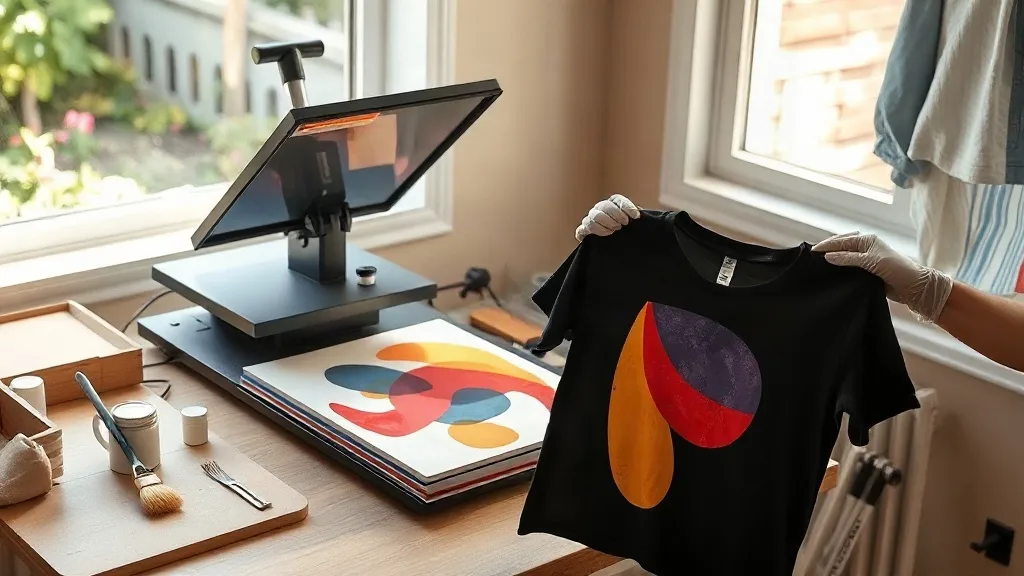
Most people who buy their first dtf transfers expect a simple swap: load the film, press it, peel it, done. Then the first batch goes out and a few come back. A corner lifts after two washes, a dark garment shows a faint halo around the design, or a stretchy hoodie cracks along a fold. None of that means the method is wrong. It means the settings and the film were chosen for a different job than the one in front of you. This guide walks through the parts that actually decide whether a transfer stays put, based on how small shops run the process day to day rather than how a supplier brochure describes it.
What a DTF transfer really is
A dtf transfer is a printed design on a special film, dusted with hot-melt adhesive powder while the ink is still wet, then cured. When you press it, the adhesive melts into the fabric while the ink layer sits on top. The film peels away and leaves the design behind.
That adhesive layer is the whole point. It is what lets the same transfer bond to cotton, polyester, blends, canvas, and even nylon that would reject a vinyl application. It is also what makes the process forgiving of small temperature variations compared with sublimation, which only works on light polyester and demands a tight press window.
What DTF does not do is hide the surface underneath. Because the ink and adhesive sit on the fabric rather than inside it, the design has a slight hand feel. On a heavy tee most customers stop noticing after a wear or two. On a featherweight poly jersey it is more obvious, and that is worth mentioning before someone orders fifty pieces.
Film types and when each one earns its price
Film choice is where most quality problems start, and it is the part buyers skip when comparing quotes. Two rolls can look identical and behave nothing alike.
Cold peel film
Cold peel film waits until the transfer has cooled completely before the carrier sheet comes off. The adhesive has time to set, which gives crisper edges and better fine detail. Small text, thin outlines, and halftones hold up noticeably better. The tradeoff is time: on a busy press you are waiting thirty to sixty seconds per piece, which adds up across a run of two hundred.
Hot peel film
Hot peel lets you pull the carrier while the transfer is still warm. It suits high-volume work where speed matters more than razor-sharp fine lines. The catch is that hot peel is less forgiving of uneven pressure. If your platen is slightly domed or the garment has a thick seam under the design, hot peel will show it.
Stretch and specialty films
For performance wear, swimwear, and anything with spandex content, a stretch film paired with a stretchable powder keeps the design from cracking when the garment moves. These cost more per sheet, and they are worth it on the garments where a standard film would fail within a month. Using standard film on a compression top is one of the most common causes of returns in shops that print activewear.
Press settings that hold up in the wash
Temperature, pressure, and time all matter, but pressure is the one people underestimate. A press that is set correctly on temperature and badly on pressure will produce transfers that look fine on the table and fail in the laundry.
- Temperature: Most films sit in the 150 to 165 degrees Celsius range. Stay inside the film maker's window. Going hotter to speed things up cures the adhesive too fast and weakens the bond.
- Pressure: Medium to firm, applied evenly. If you can see the garment texture through the film after pressing, you are usually in the right zone.
- Time: Ten to fifteen seconds is typical, but pre-pressing the garment for three to five seconds to remove moisture is not optional. Damp fabric traps steam under the adhesive and that steam becomes a bubble later.
- Cooling: Let cold peel transfers cool flat, not folded over a hanger. Folding while warm sets a crease into the ink layer.
A cheap way to check your setup: press a test transfer onto an offcut of the actual garment you are printing, wash it three times at 40 degrees, and inspect it. If the edges still look sharp and there is no lifting, your settings are good for that fabric and film combination. Do this once per new garment style and you will stop guessing.
Choosing garments that work with the process
The transfer is only half the equation. Fabric construction decides how well any adhesive can grip.
Tightly woven cotton and cotton-rich blends are the easiest. Ringspun jersey takes a transfer cleanly and keeps it. Open-knit fabrics, heavily brushed fleece, and anything with a silicone or water-repellent finish are harder. Those finishes exist to stop things sticking, and adhesive is a thing.
For fleece and brushed interiors, press a little longer and consider a slightly higher pressure, but test first. For water-repellent outerwear, either skip the design or use a film specifically formulated for technical fabrics. No amount of extra pressure will fix a coating designed to repel bonding.
Seams are the other trap. A design placed across a side seam or a pocket edge will have less contact area over the raised section, and that is exactly where lifting starts. Nudge the placement a centimetre and the problem disappears.
Common failures and what they actually mean
The design lifts at the corners after a few washes
Usually insufficient pressure at the edges or incomplete cooling before peeling. Check that the press platen is flat, press the whole design area evenly, and let cold peel film cool fully.
There is a visible outline around the design on dark shirts
Excess powder. Too much adhesive left on the film creates a border that shows against dark fabric. Shake off the surplus properly before curing, and brush the sheet if needed.
The design cracks when the garment stretches
Standard film on stretchy fabric, or a design with very thick ink coverage. Thin the coverage, switch to stretch film, or both.
The transfer looks dull or patchy
Moisture in the garment, or powder applied while the ink had already dried. Pre-press the garment and powder immediately after printing.
Storage, handling, and shelf life
Transfers are not indestructible. Keep them flat, away from direct sunlight, and out of humid rooms. Stacked sheets pressed under heavy boxes can take on the texture of whatever is beneath them. A simple flat file or a clean shelf with light weight on top is enough.
Most films stay usable for several months stored properly, but adhesive performance does degrade with humidity. If a batch has been sitting through a damp summer, run a test press before committing it to a customer order. It takes two minutes and can save a reprint.
When DTF is the right call, and when it is not
DTF wins on short runs, multi-colour designs, and mixed fabric orders. If a customer wants twenty shirts in four colours with a full-colour logo, DTF handles it in one pass without screens or colour separations. That flexibility is why it has become the default for small shops doing custom work.
It is less suited to very large single-colour runs where screen printing is cheaper per unit, and to garments where an absolutely invisible hand feel is the top priority. Being honest about those limits with customers builds more trust than promising a transfer will feel like nothing at all.
Frequently asked questions
How many washes should a DTF transfer survive?
With correct pressing and normal care, a well-applied transfer on suitable fabric typically lasts the life of the garment, often well past fifty washes. Failures usually trace back to pressure, moisture, or a fabric finish rather than the transfer itself.
Can I apply DTF transfers with a home iron?
You can, but results are inconsistent because a household iron does not deliver even pressure across a large area. Small designs on flat cotton sometimes work. Anything with fine detail or a large surface area needs a heat press for a reliable bond.
Do DTF transfers work on 100 percent polyester?
Yes, and that is one of the method's advantages over sublimation. On polyester the design sits on the surface rather than dyeing into it, so it works on dark colours and on poly blends that sublimation cannot handle. Use a lower press temperature and test on an offcut first.
Why does my transfer peel off after the first wash?
The three usual causes are pressing over a seam, pressing damp fabric, or peeling cold peel film too early. Wash the garment inside out and avoid fabric softener on the printed area, since softener coats the fibres and works against the adhesive.
How should I store unused transfers?
Flat, dry, and out of sunlight. Avoid humid storage rooms and heavy weights on top of the stack. If a roll or sheet has been stored for a long time, do a test press before using it on a paid order.