
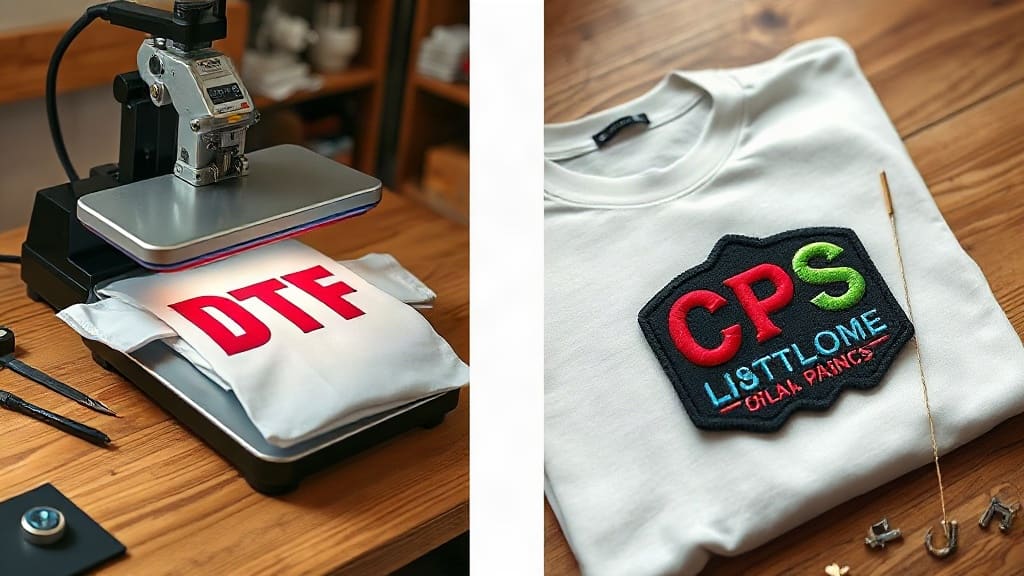
When you're planning custom apparel, the decoration method you choose can make or break the final product. Two popular options are DTF transfers and CPS patches. If you're wondering which one suits your project, this guide breaks down everything you need to know. We'll compare durability, design flexibility, cost, and application so you can decide with confidence.
What Are DTF Transfers?
DTF transfers, or Direct-to-Film transfers, are a digital printing technology that transfers intricate designs onto fabric. The process involves printing your artwork onto a special film, coating it with adhesive powder, and then heat-pressing it onto the garment. This method has gained popularity for its ability to reproduce full-color, photographic-quality images with fine details.
How DTF Transfers Work
The DTF process starts with a digital printer that lays down CMYK plus white ink onto a PET film. A powdered hot-melt adhesive is applied while the ink is still wet, then the film is cured. When you're ready to apply, you place the film on the fabric and use a heat press at around 300-320°F for 10-15 seconds. After cooling, you peel away the film, leaving a vibrant, flexible design.
Pros of DTF Transfers
- No color limits: You can print gradients, photographs, and complex multicolor designs without extra cost.
- No weeding: Unlike vinyl, there's no tedious cutting or weeding process.
- Works on many fabrics: DTF adheres well to cotton, polyester, blends, and even some treated nylon.
- Soft feel: The transfer is thin and flexible, so it doesn't stiffen the garment.
- Fast turnaround: Once the film is printed, application takes seconds.
Cons of DTF Transfers
- Durability concerns: With proper care, DTF can last 50+ washes, but it may crack or fade over time, especially with high-stretch fabrics.
- Not ideal for small details: Very fine lines or tiny text can sometimes lose definition.
- Equipment needed: You'll need a DTF printer, powder shaker, and heat press, which can be a significant investment.
- Breathability: Large solid areas can feel slightly less breathable than screen printing.
What Are CPS Patches?
CPS patches, often referred to as custom patches, are embroidered or woven emblems that are sewn or heat-sealed onto garments. CPS stands for "Custom Patch Solutions" or similar, but in the context of patchesup.com, it represents high-quality custom patches tailored to your design. These patches add a tactile, premium look and are commonly used for uniforms, hats, jackets, and bags.
How CPS Patches Are Made
CPS patches are created by stitching colored threads onto a backing fabric (twill) using an embroidery machine. The design is digitized, and the machine replicates it with precision. After embroidery, the patch is cut to shape and can have a merrowed border or laser-cut edge. You can choose from different backing options: sew-on, iron-on, Velcro, or adhesive.
Pros of CPS Patches
- Exceptional durability: Embroidered patches can outlast the garment itself, resisting fading and wear.
- Premium look and feel: The raised texture adds a professional, high-end appearance.
- Easy application: Iron-on or Velcro backings make them user-friendly.
- Versatile: Suitable for caps, jackets, bags, and even delicate fabrics if sewn.
- Branding potential: Patches can be removed and transferred between items, perfect for uniforms.
Cons of CPS Patches
- Design limitations: Complex gradients and photographic images are difficult to reproduce; embroidery works best with solid colors and simple shapes.
- Higher cost for small runs: Setup fees (digitizing) can make small orders expensive.
- Weight: Patches add bulk, which might not be ideal for lightweight fabrics.
- Application time: Sewing takes longer than heat pressing, though iron-on is quicker.
Head-to-Head Comparison
To make the choice easier, here's a direct comparison across key factors.
Design Complexity
DTF transfers win for intricate, multicolor, and photographic designs. CPS patches are limited to simpler, vector-style artwork with a maximum of 12-15 thread colors.
Durability
CPS patches are generally more durable, especially for high-wear items. DTF transfers can deteriorate with repeated washing, though proper care extends their life.
Cost
For small quantities, DTF transfers are cost-effective because there's no setup fee. CPS patches have a one-time digitizing fee, but the per-piece cost drops significantly for bulk orders.
Application
Both require heat pressing for iron-on versions, but DTF is faster. CPS patches can also be sewn, which is more time-consuming but offers the most secure hold.
Fabric Compatibility
DTF works on almost any fabric, including polyester and blends. CPS patches adhere best to sturdy fabrics like denim, canvas, and twill; they may not work well on stretchy or delicate materials.
When to Choose DTF Transfers
Opt for DTF transfers if you need full-color, detailed designs, have a tight deadline, or are working with fabrics that are tricky for embroidery. They're ideal for fashion apparel, promotional t-shirts, and small batches with unique designs.
When to Choose CPS Patches
Choose CPS patches for a premium, textured look that lasts. They're perfect for uniforms, caps, and outdoor gear where durability is paramount. If you want a classic, embroidered aesthetic, patches are the way to go.
Frequently Asked Questions
Can DTF transfers be applied to cotton shirts?
Yes, DTF transfers work excellently on cotton. The adhesive bonds well with natural fibers, and the result is a soft, flexible print that withstands washing when cared for properly.
How long do CPS patches last?
CPS patches are extremely durable and can last for years, often outliving the garment. The embroidery thread resists fading, and the backing remains intact through repeated wear and washing.
Are DTF transfers washable?
Absolutely. Wait 24 hours after application, then wash inside out in cold water. Avoid bleach and tumble dry on low. With these precautions, DTF prints can last 50+ washes.
Which method is better for small logos on polo shirts?
For small logos, CPS patches offer a professional, embroidered look that's classic for polos. However, DTF transfers can also work well and are more cost-effective for small quantities without setup fees.
Can I put a CPS patch on a nylon jacket?
It's not recommended to iron-on CPS patches to nylon because the heat can damage the fabric. Sewing is a better option, but test on a small area first. Alternatively, DTF transfers can adhere to nylon with special low-temperature adhesives.
Ultimately, the best choice depends on your specific needs. Consider your design, fabric, quantity, and budget. Both DTF transfers and CPS patches have their place in the custom apparel world, and understanding their strengths will help you create standout products.