
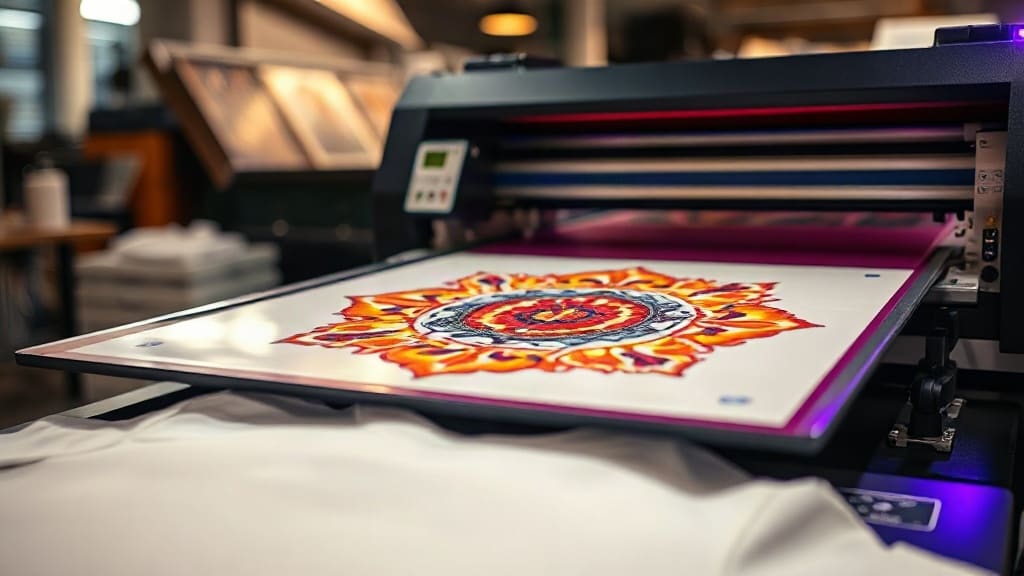
When you run a print-on-demand (POD) business, the printing method you choose can make or break your customer satisfaction. Among the many options, DTF printing (Direct to Film) has emerged as a game-changer, offering unparalleled versatility and vibrant results. Unlike traditional methods that limit you to certain fabrics, DTF opens up a world of possibilities, from cotton to polyester and even blends. In this guide, we’ll dive deep into DTF printing for POD, covering everything from the basics to advanced tips, so you can decide if it’s the right fit for your shop.
What is DTF Printing?
DTF stands for Direct to Film. It’s a printing technique where your design is printed onto a special film, coated with a powder adhesive, and then heat-pressed onto the fabric. This process allows for intricate details and full-color designs without the need for pre-treatment or weeding, which are common in other methods like screen printing or vinyl cutting. The result is a soft, stretchable print that adheres well to a variety of materials.
The DTF Printing Process Step by Step
Understanding the workflow helps you appreciate why DTF is gaining traction. Here’s a breakdown:
- Design Preparation: Your artwork is prepared digitally, ensuring it’s mirrored and sized appropriately. Unlike DTG, you don’t need to worry about color limitations; CMYK plus white ink gives you a wide gamut.
- Printing: A specialized DTF printer lays down the design onto a PET film. White ink is typically printed first as a base, followed by the color layers.
- Powder Application: While the ink is still wet, a thermoplastic powder is sprinkled over the film. This powder will act as the adhesive when heat is applied.
- Curing: The film passes through a heat source (like a heat press or oven) to melt the powder, creating a dry, tack-free surface.
- Transfer: The film is placed on the garment and heat-pressed. The adhesive melts, bonding the design to the fabric. After cooling, the film is peeled away, leaving a vibrant, durable print.
Why DTF is Ideal for Print on Demand
Print on demand demands flexibility, speed, and quality. DTF excels in all three areas. Here’s why it’s a perfect match for POD:
- No Minimums: You can produce one-off items without setup costs, ideal for POD’s on-demand model.
- Fabric Versatility: Works on cotton, polyester, blends, and even treated nylon. This means you can offer a wider range of products.
- Vibrant Colors: The white ink base ensures colors pop on both light and dark garments.
- Durability: Prints resist cracking, peeling, and fading even after multiple washes.
- Efficiency: Once the film is prepared, pressing is quick, allowing you to fulfill orders fast.
DTF vs. Other Printing Methods
How does DTF stack up against DTG, screen printing, and vinyl? Let’s compare:
- DTG (Direct to Garment): Best for 100% cotton, but requires pre-treatment and can be slow. DTF is faster and works on more fabrics.
- Screen Printing: Cost-effective for bulk orders but has setup costs and limited colors. DTF is better for small batches and complex designs.
- Vinyl (HTV): Good for simple designs but limited in detail and color. DTF handles gradients and photographs with ease.
Getting Started with DTF in Your POD Business
Ready to integrate DTF into your workflow? Here’s what you need:
Essential Equipment
- DTF Printer: Prices range from $3,000 to $20,000. Start with a reliable model from brands like Epson or Roland.
- Heat Press: A quality heat press (e.g., from Stahls or Geo Knight) ensures even pressure and temperature.
- PET Film: Special coated film designed for DTF.
- DTF Powder: Thermoplastic adhesive powder.
- Curing Oven or Heat Gun: For melting the powder.
- Design Software: Adobe Photoshop or Illustrator for creating artwork.
Step-by-Step Setup
- Choose Your Printer: Consider your budget and production volume. Entry-level printers are fine for small shops.
- Select Materials: Use high-quality film and powder to avoid clogs and ensure durability.
- Master the Process: Practice on scrap fabric to dial in temperature, pressure, and time.
- Integrate with POD: Connect your DTF workflow with your e-commerce platform (like Shopify or Etsy) for seamless order fulfillment.
Maximizing Quality and Durability
To ensure your DTF prints stand out, follow these best practices:
- Pre-Treat Fabrics: Although DTF doesn’t require pre-treatment, lightly pressing the garment removes moisture and wrinkles for better adhesion.
- Control Temperature and Pressure: Follow the powder and film manufacturer’s recommendations. Typically, 300-350°F for 10-15 seconds.
- Use Quality Inks: Cheap inks can clog printheads and produce dull colors.
- Proper Storage: Store unused film and powder in a cool, dry place to prevent moisture absorption.
- Wash Care: Advise customers to wash inside out in cold water and avoid ironing directly on the print.
Common Pitfalls to Avoid
Even seasoned POD sellers make mistakes. Watch out for these:
- Insufficient Powder: Too little powder leads to poor adhesion; too much creates a stiff feel.
- Incomplete Curing: Uncured powder will wash away, ruining the print.
- Wrong Pressure: Too much pressure can cause the design to spread; too little results in poor bonding.
- Ignoring Fabric Type: Some fabrics (like nylon) require lower temperatures to avoid scorching.
Cost Analysis: Is DTF Worth It?
Investing in DTF requires upfront costs, but the long-term savings can be significant. Here’s a rough breakdown:
- Printer: $3,000-$8,000 for entry-level.
- Film: ~$0.50-$1 per sheet (A3).
- Powder: ~$20-$30 per kilogram, enough for hundreds of prints.
- Ink: ~$100-$200 per liter set.
Per print cost can be as low as $1-$2 for a standard-size design, making it competitive with DTG and screen printing for small runs. Plus, the ability to offer a wider range of products can increase your average order value.
Profitability Tips
- Bundle Products: Offer matching designs on t-shirts, tote bags, and hoodies.
- Upsell Premium Fabrics: Use DTF on high-quality blanks to justify higher prices.
- Reduce Waste: Nest designs on film to maximize usage.
- Market Your Unique Capabilities: Highlight that you can print on dark colors and tricky fabrics.
Future of DTF in Print on Demand
As technology advances, DTF printers are becoming faster and more affordable. We can expect improved ink formulations for even softer prints and expanded fabric compatibility. For POD sellers, adopting DTF now means staying ahead of the curve and meeting customer demands for high-quality, customized apparel.
Frequently Asked Questions
What fabrics can I use with DTF printing?
DTF works on a wide range of fabrics including cotton, polyester, cotton-poly blends, nylon, and even leather. It’s particularly useful for dark and colored garments where other methods struggle.
How durable is a DTF print?
When properly applied and cared for, DTF prints can last as long as the garment. They resist cracking, peeling, and fading through numerous wash cycles. Following wash care instructions is key.
Do I need a special printer for DTF?
Yes, you need a dedicated DTF printer that uses pigment inks and has a white ink channel. However, some modified DTG printers can be converted for DTF use.
Can I use DTF for small orders?
Absolutely! DTF is cost-effective for one-off items and small batches, making it ideal for print-on-demand. There are no minimums or setup fees.
How do I troubleshoot common DTF issues?
Common issues include clogged printheads (regular maintenance helps), poor adhesion (adjust powder and pressure), and dull colors (ensure proper curing). Always test on scrap fabric first.
Conclusion
DTF printing is revolutionizing the print-on-demand industry by offering unmatched versatility, vibrant colors, and durability. Whether you’re a seasoned POD seller or just starting, integrating DTF into your production can set you apart. With the right equipment and techniques, you can deliver stunning products that keep customers coming back. So, why wait? Explore DTF today and take your POD business to the next level.